Lunar Landscape, August 2008
In celebration of the 40th. anniversary of the Apollo missions to the Moon I am going to post some cool images of some Lunar meteorites.
You may remember...or not depending whether or not you're a Lunar fanatic like I, Gene Cernans' , the last man on the Moon, words he spoke as he was climbing the ladder of his Lunar Module for the last time, December 14 1972, "America's challenge of today has forged man's destiny of tomorrow" ...well maybe not so much. One only has to look here instead of here to find where our priorities lie.
Lunar meteorites come to us courtesy of by chance some other meteorite striking the Moon sending rocks and debris out into space, to be captured by the Earth's gravity, then to strike through our atmosphere as a meteor to land and become a Lunar meteorite.
The above image is Lunar meteorite NWA (North West Africa) 4881, found near Algeria in 2005. I love the texture and look of this meteorite, looks like it is covered in cellophane, very otherworldly looking, like it is.
The above Lunar meteorite is Dhofar 910, found in Oman in 2003. It is classified as a Feldspathic glassy-matrix fragmented breccia from the Lunar highlands, really all I know is it looks like an icy cratered planet through a microscope. I guess what I'm trying to do by holding Lunar rocks and taking images is hold on to something that has long been forgotten, the days of Lunar exploration.
Just in case you're interested, the Orionid Meteor Shower takes place October 20-22, look to the east starting around 11:00 pm on each of those days for the show to start, the Moon will be out as well but you should still see around 20 or so meteors an hour.
The video below is a clip I put together of these two Lunar meteorites, imagine yourself in a spacecraft orbiting another celestial body as you are watching it.
Thursday, October 16, 2008
Lunar Meteorites


Monday, October 13, 2008
Auroras And Plasma Bullets

So I was out getting groceries Saturday morning when I got a call from my buddy at SpaceWeather.com, Dr. Tony Phillips. The good Doctor informed me of a large Solar wind heading our way and to expect Auroras. Great, no clouds but we have a huge 90% Full Moon out that night, usually you can't see any Auroras when the Moon is out in full force, takes away the contrast.
Thought I'd head out that night anyways and much to my surprise I was able to get some Aurora shots. Bonus I took a shot of the almost full Moon and Orion rising in the east, like a sleeping giant come to life, yes our friend Orion is back, so are the cold temperatures he brings with him, man was it cold, -10c, well I mean cold for this time of year, especially since I was wearing a summer jacket. Got some Aurora shots then thought to myself, hey I'll come back after the Moon sets , which was going to be around 4:00 am, I should get some even better shots.
At that time the Aurora (above image) was almost over so I thought I'd head out of town to see what I could see Aurora wise, but get this, I ran into a train, yes at 4:15 am I ran into a train, well not into it but you know what I mean.
So I'm looking to see how long it is, great not long, it just seemed long because it STOPPED! That's right it stopped, got out of the car to take a pic of it stopped, and then guess what happened?, a truck pulls up behind me, all this at 4:15 am. I was going to take a pic of the truck but thought twice when I saw the look on the guys face, about as happy as me.
After half an hour of the train stopping it started to move, of course by then it started to get light outside, I just went home.
An interesting tidbit of info here, seems they may have just found out why the Auroras dance with the help of the "THEMIS MISSION" or " Time History Of Events And Macroscale Interactions During Substorms Mission" for long, those crazy scientists and their acronyms. To sum it up, apparently the Solar wind's charged particles stretch our magnetic field much in the same way you stretch an elastic band, when the magnetic field can no longer stretch it flicks back the Solar plasma, which they call Plasma Bullets back to Earth, the explosion gives off it's energy in the form of harmless light energy, the crazy lights we call the Auroras.
I'll leave you now with a clip of 72 images I took over a time frame of 40 minutes of the Auroras I took that night, I also put a sample message from Dr. Tony at the beginning, doesn't he sound like a friendly guy?
Friday, October 10, 2008
Daytime Celestial Viewing

Who hasn't looked to the heavens during the day, usually to see what the weather is like, besides the weather one of my favorite daytime targets is a small crescent Moon. It's fun and rewarding if you can find it as the glare from the Sun makes it almost impossible to spot let alone image.
So here's the thing, I will give some lucky person 50 Hanna Montana/Miley Cyrus 3D glasses if you are chosen as the winner by me, my cat and a select few other judges of the "Find and Photograph The Daytime Crescent Moon Contest", Let me tell you 50 3D glasses doesn't even put a dent in my collection. Not only will you receive the valuable 3D glasses estimated to be worth lots but I will post your images on this blog, actually I will post all submissions to my blog, up for the challenge? Hint, some dates to look out for; October 25-27 in the South West. October29-31 in the South. November 24-26 in the South West, November 28-30 in the South.
Second place winner will receive a DVD of the coolest movie around "In The Shadow Of The Moon". I can't say enough about this movie, all about the Apollo Missions and the effect going to the Moon had on the Astronaut's lives, and the soundtrack is killer. The best part of this whole thing is if you enter an image, you'll probably be the only one that does, hey, guaranteed to win.
To help you out I'll save you some time, the camera settings I used that had the Moon stand out best for the daytime shot were, ISO 100, exposure 1/500 sec. To find out what phase the Moon is in just click on my Moon phase button on my sidebar, to find the location in the sky of the Moon just go to Sky View Cafe and type in your city, it will come back with the location of everything in the sky on any particular time or day for your location. Any questions and to submit your image just email me.
While we're on the topic of daytime celestial viewing back in August I got a shot of some crepuscular rays. These rays are huge shadows cast into the sky just before Sunrise or just after Sunset by the Sun's rays interfering with clouds, mountains or in the case above, atmospheric interference caused by all the forest fires here in Saskatchewan . We had around 3x the average amount of fires this year as compared to the rest of Canada. Due to the serious and far ranging implications of these fires NASA sent a 120 scientists and a couple planes to the military base in Cold Lake Alberta to analyse their effect on our environment .
I got an email from from an intern at GOOD Magazine who thought my readers would enjoy their latest movie production on satellites, I agree, it is very cool.
Tuesday, October 7, 2008
Asteroid 2008 CT3
UPDATE: It is confirmed asteroid 2008 TC3 hit the Earth's atmosphere around 750 miles southwest from the projected atmospheric impact area, this was confirmed by an Air France KLM airliner, the crew noticed a short flash just before the impact time. Apparently a few meteorites made it to the surface. The image below shows the infrared satellite image of the airliner (+) and the predicted impact area (0). As of right now there are no known images of the Fireball.
A small asteroid, 2008 TC3 was to have entered the Earth's atmosphere over Northern Sudan creating quite the light show last night, no pics so far, probably not a whole lot of camcorders over there. The above YouTube video is a simulation of what the Earth would look like from the approaching asteroid. As far as the asteroid, nothing too major about that, we get this size entering our atmosphere every other month or so, but what is interesting about this event is that this was the first time someone was able to predict when and where an asteroid was going to enter our atmosphere ahead of time, it's been tried before but with no success. I'm hoping there is more of the same to come, I'd love nothing better then to stand in my backyard with my camera awaiting the next arrival of a new born baby fireball.
Now the size of this asteroid ranged any where from a few meters to several feet and is not expected to do any damage if it happens to reach the surface, it's not the size I'm concerned with, I mean it's hard to give an exact size of something that far away, but can we pick a system people, I laid awake last night thinking, ... what was the size of it again? , 3 ft., 3 meters, no it was 10 meters, no 10 feet, geez. The first thing you notice when you get into amateur astronomy is we embrace both systems, I don't have just a 12 inch scope, I also have a 300 mm one, coupled with the fact that I also have a 8 inch 200 mm scope, too many numbers, too many numbers. I've resolved to the fact that my scopes no matter what size make stuff bigger. I'm also finding the older I get the less numbers I can remember so it would be great if we just let the old system go and delve into the metric system, it would make things a whole lot easier. The asteroid what ever size it ended up being was first discovered by the NASA funded Catilina Sky Survey with their telescope on Mt. Lemmon, image above. I will update this post as soon as more info becomes available. Hey while we're all waiting for some images of asteroid 2008 CT3, I thought I'd post the image below, it is a daytime fireball I was lucky enough to capture while taking an image of a Sunset last April, since it was only a few degrees from the Sunset I was imaging I had my camera equipped with a telephoto lens and focused, got it exploding.

On October 6 2008 around 4:40am EDT Messenger came within 125 miles of Mercury for the second time this year. The probe took 100's of images , gathered data and grabbed another gravity assist to slow it down for it's eventual orbital insertion with the planet in March of 2011.
Messenger started sending back images this morning around 1:50 am, the image above shows Mercury about 90 minutes after the probes closest approach. A lot of the eastern portion of the above image are views not taken by any spacecraft before. I will update this post as I receive more information.
I leave you now with an animated Moon collage I put together with the various Moon shots I have taken with my camera/various sizes of scopes.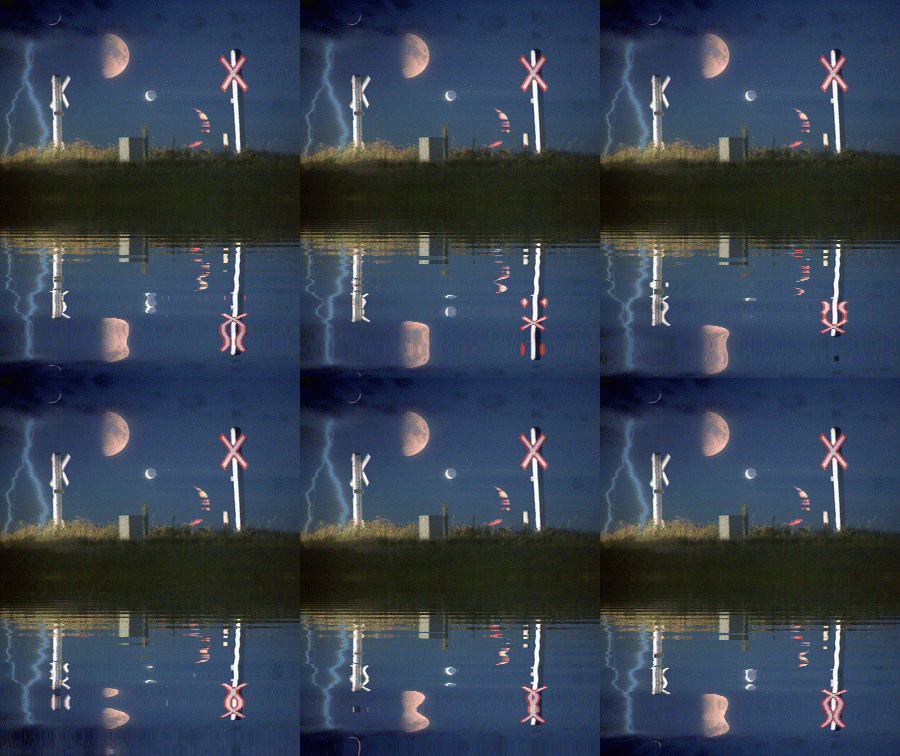
Friday, October 3, 2008
Sikhote-Alin Meteorite
If you like old black and white Russian documentaries with English subtitles, boy have I got the film for you. Back in February of 1947 a huge meteorite fell to Earth in the Russian Sikhote-Alin Mountain Range. The Russians sent in a crew to retrieve and document the fall, the above movie is part of the documentary. I got permission to put the movie on YouTube from the person who did the subtitles, it is condensed down to nine and a half minutes to fit on YouTube, if you want to download the whole 18 minutes you can go to the originating web site here.
The Sikhote-Alin meteorite was witnessed by many people, it made a huge smokey trail and bang that could be viewed and heard for 30 km around the impact zone. The impact made 30 craters and left 28 tonnes of material behind.
The image above are a couple of actual Sikhote-Alin meteorites, the one on the left is called meteorite shrapnel because it looks like twisted bomb shrapnel, the meteorite on the right is a small individual piece of the meteorite, both were gathered back then.


The images above are pictures taken under a microscope of the meteorite at 40 times magnification. Witnesses say it looked like a bright star then turned into a fireball leaving a large smoke trail behind, it entered the Earth's atmosphere at around 31,000 mph. The samples are quite heavy and magnetic as they consist of around 90% iron.
October 6 the Messenger Probe will make another flyby of our planet Mercury. This will be the second flyby of our little planet by the probe. Messenger will come to within 125 miles of it's surface to gather another gravity assist to slow it down for the eventual orbit of Mercury in March 2011.
Messenger has 6 major scientific questions to try and answer.
1. Why is Mercury so dense?
2. What is the geological history of Mercury?
3. What is the nature of Mercury's magnetic field?
4. What is the structure of Mercury's core?
5. What are the unusual materials at Mercury's poles?
6. What volatiles are important at Mercury?
Once in orbit Messenger will gather data to try and answer the above questions, the mission is slated to last for one year, ending March 2012.
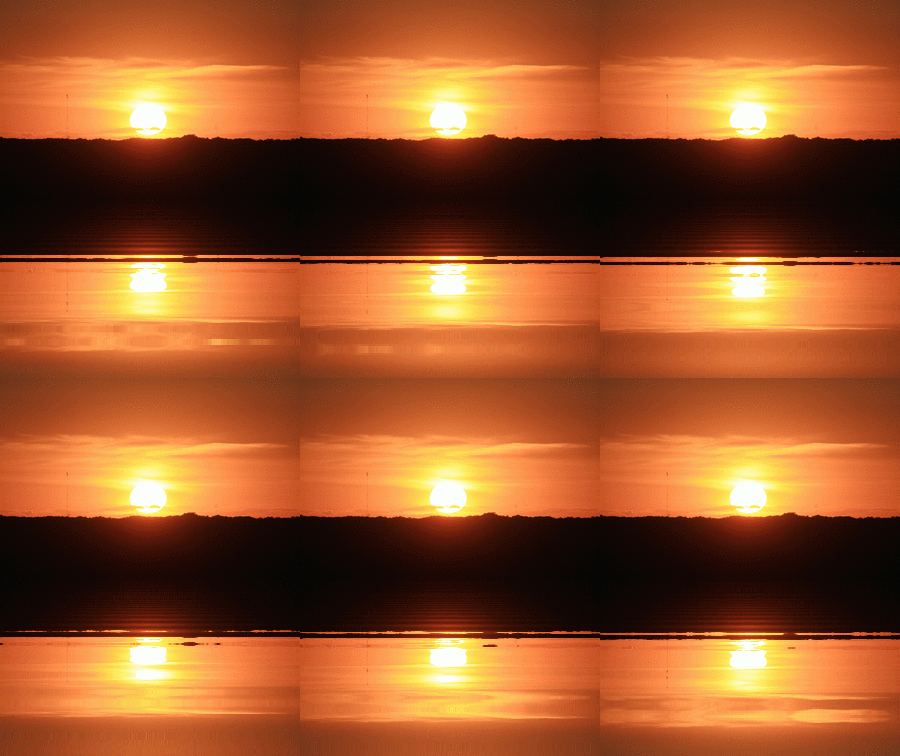
I'll leave you now with a Sunset I took a couple nights ago, the Sun is slowly setting earlier everyday, a sign that winter and the minus 40c weather is on it's way, so sad.